Things to Do in Rome: 27 Best Spots & Hidden Gems
Rome, Italy is a magical and overwhelming destination, and although I’ve been all over the world, it is still one of my favorite places I have ever been. There is so much history around every corner, and it’s also one of the world’s greatest food cities.
It is often chaotic, it can be hot and crowded, but it is one of those places that is completely worth your time and effort to visit.
I’ve been to Rome several times now, and I still have things I want to do in Rome when I return. You can immerse yourself in history, food, culture and art all in one place. You will truly love your trip to Rome, and I’m happy to share the best Rome itinerary and must-see sites.
Quick Links: Must-see sights in Rome.
These are the exact tours I took on my last trip to Rome! These are unmissable for trips to Rome. They are all small groups for under 15 people. I did extensive research to choose these options and I learned so much history behind these iconic monuments.
Best Rome Tours:
Colosseum, Palantine Hill and Roman Forum Tour
Vatican Museums, Sistine Chapel, and St. Peter’s Basilica Tour
Night Walking Tour Rome (Pantheon, Trevi Fountain)
Trastevere Food Tour
Borghese Gallery
Lodging: Booking.com
Travel Insurance: Insubuy
Map of Must-See Activities in Rome
Rome is very walkable and has an easy to use bus/metro system. Just tap your credit card before entering the metro or bus and you are good to go. Buses are reliable and safe.
Most major sites are nearby to one another, but you will definitely be walking a ton!
27 Best Things to Do in Rome
You could go back to Rome several times and still have activities to see and do. It is a stunning, awe-inspiring, historical city that has things to do for the food, art, or history lover.
Colosseum, Roman Forum & Palentine Hill
These sites are by far my favorite part of my various trips to Rome. The Colosseum, Forum, and Palatine Hill are stunning reminders of history around Rome. It truly feels like stepping into a time machine!
1. Colosseum
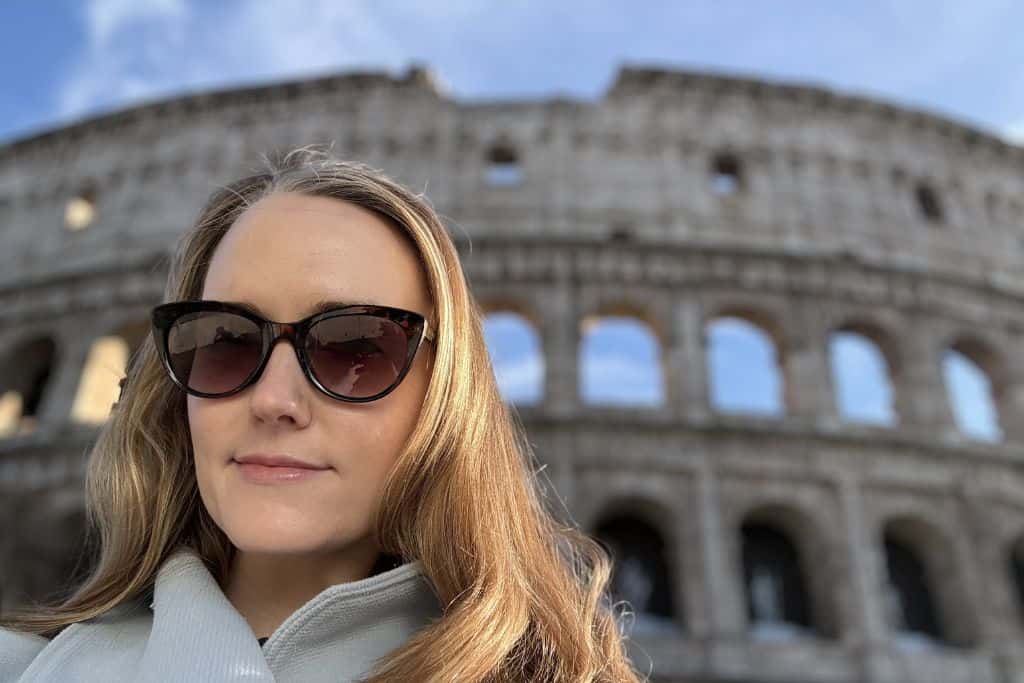
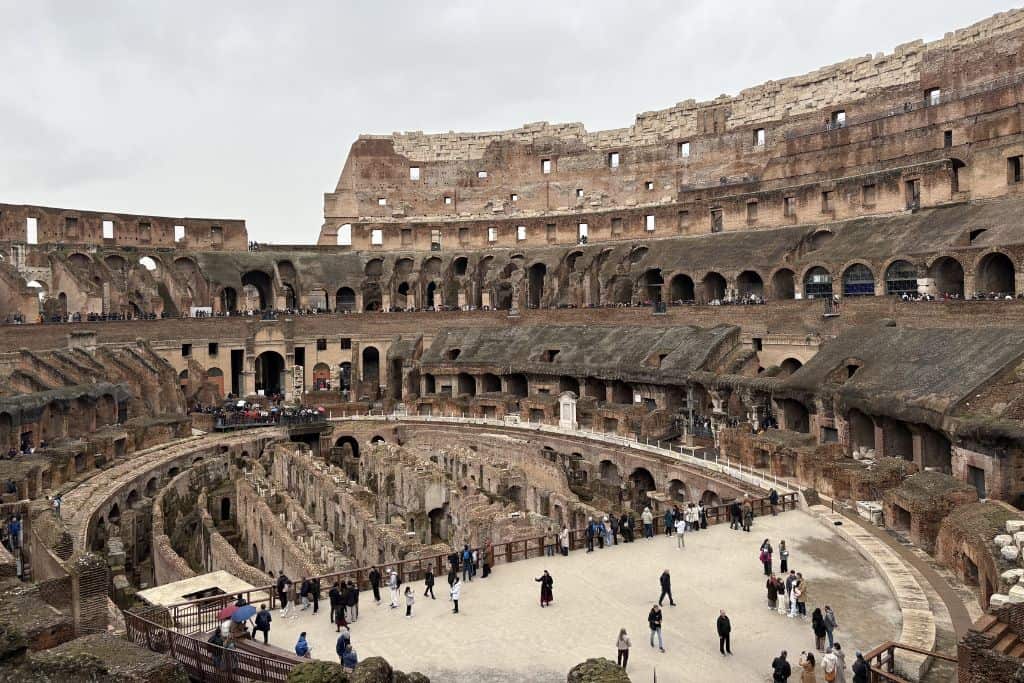
The Colosseum is by far the best site to visit in Rome; Truly a bucket-list itinerary!
The Colosseum is the largest gladiator arena from the Ancient Roman era. Built in the first century AD, it served as a central entertainment hub for Roman citizens. And yes, it did actually host hundreds of gladiator fights!
You can always see the Colosseum for free by walking around the outside. There are numerous great photo spots around the perimeter of the arena.
The best spot to take Colosseum photos is on Via Nicola Salvi.
To enter the Colosseum, you will need to purchase a ticket. The Colosseum has official ticketing website where you can choose a variety of entrance options or specific floors to visit.
There is your general entry that will only get you on the first level, but there are sometimes options for underground tour or gladiator entrance tour where you can enter the Colosseum at the same entrance as the gladiators did.
Click here to book your guided tour of the Colosseum! Must-see tour for this iconic monument.
Now I will note that these Colosseum tickets are really hard to get from the official website and often sell out or become unavailable well in advance. You can try using VPN or going on the site during Rome business hours to see if there is availability.
However, I would actually recommend a tour of the Colosseum, and combining it with a tour of the Roman Forum, and Palantine Hill, even if you are able to get tickets off the official website. The Colosseum is one of the must-see things to do in Rome.
2. Roman Forum
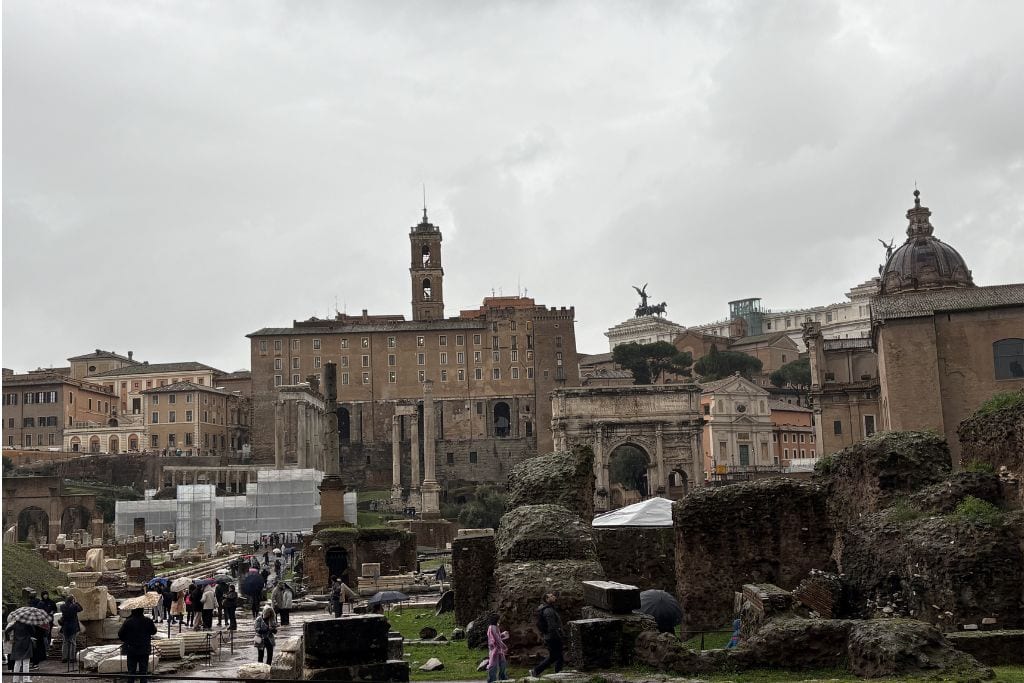
Many people just visit the Colosseum, but if you have the time I recommend doing a combined tour with the Roman Forum or Palatine Hill. Without a guide, you will miss out on so much context, history, and details of these historical sites. Must-do in Rome!
The Roman Forum (right next to the Colosseum) was the center of Rome, literally the center of civilization. You will walk through these ancient ruins and see where these central meeting locations and religious sites were.
3. Palantine Hill
Palantine Hill (which is also right across the street from the Colosseum) is the site of many of the Roman Emperors’ Palace. For this site it is essential to have a guide because the ruins are a lot more rudimentary. They’re pretty much rubble at this point but the tiles, baths and courtyards are still evident!
However, your guide is able to show you where original baths were, where property lines were, and really make the site of the Roman Empire emperor’s house come to life.
Click here to book your guided tour to the Colosseum, Palantine Hill and Roman Forum; The best tour I did in Rome!
You can buy a ticket for a tour of three of these sites. It’s a 2-3 hour tour that I would highly recommend if you are interested in diving into history and getting a bit more context rather than just walking through these sites without a proper knowledge. I felt that it was worth every penny.
Many of the guides are archaeologists who actually worked on these sites and uncovered objects, which is an amazing context that they can provide. My guide pointed out their exact work location on the Roman Forum, which was so cool! Such a bucket-list item for Rome!
Vatican Museums, Sistine Chapel, and St. Peter’s Basilica
Vatican City is a must-see for religious pilgrims and non-religious visitors alike. Although I’m not religious, it is still in my top 2 of things to visit in Rome! Truly an iconic bucket list item.
Vatican City is so influential as a historical site of religious and political influence. Vatican City comprises the museums, the Sistine Chapel, and St. Peter’s Basilica. The rest of the buildings are open only to authorized guests, namely historians, researchers, and religious figures- popes, bishops, nuns etc.

4. Vatican Museums
To visit Vatican City, you will want to first visit the museums. When people say “visit the Vatican”, they mean visit the Vatican Museums. The museums are combined through a vast series of hallways more like a palace than a church.
The Vatican Museums are several miles of hallway containing art, maps, and artifacts that the papacy has gained throughout history. Could you walk through the Vatican on your own? Yes, but I would recommend getting a tour for two reasons.
One, the crowds are so immense in the Vatican that you will not have time to read all the descriptions of the items to get a deeper context. Many of the tour guides will give you an earpiece that will make walking through these hallways easy and informative.
Secondly, there is also so much history and so much to see, you simply won’t be able to see everything. Your guide will be able to give you a highlight tour and point out the notable artifacts, maps, tapestries, etc. One of the best things to do in Rome!
Art lovers rejoice! Raphael’s famous work, School of Athens, is a must-see work during your visit.
For my first time in Rome, I did just walk through without a guide. But for my second visit, I was really glad I did a full encompassing tour to get that larger detail and context. The tours also start right at opening so you can avoid the majority of the crowds (but still prepare for lots of people!)
5. Sistene Chapel
At the end of the Vatican Museums, you reach the Sistine Chapel. You are not able to reach the Sistine Chapel without going through and visiting the museums. The Sistine Chapel is part of the ticket for the Vatican.
Michelangelo painted both the ceiling and altar, titled The Creation of Adam, and Last Judgement.
The Sistine Chapel is stunning. There are no photos or speaking allowed, but there are benches along the edge for you to sit, look up, and enjoy. There are so many details; It is truly a masterpiece.
6. St. Peter’s Basilica

After the Sistine Chapel, you should absolutely visit St. Peter’s Basilica. Now, another positive about booking a tour is that you get a special entrance to St. Peter’s Basilica (one of the highlights on your trip to Rome!)
The Basilica is free to everyone and you don’t have to enter the museums to enter the Basilica ( you can enter directly from St. Peter’s Square), but the lines that I saw on my visit were insane. It is absolutely worth it to book a tour to get that special access, which will avoid waiting in any lines. and get you straight into the main hall.
Now, St. Peter’s Basilica is enormous and stunning. It is the second largest church in the world. (I believe one in Africa just surpassed it) but it is truly a work of art. Spend some time walking around, observing the beautiful ceilings, and statues. There are so many details in this immense palace.
Even if you aren’t religious, there is so much value in visiting St. Peter’s Basilica. Now, if you exit St. Peter’s Basilica and head toward the area where you would get your audio guides, you have the option of going down to visit the tombs. This is an included free experience with St. Peter’s Basilica that I think is worth it.
Click here to book a tour of St. Peter’s, including the Dome climb!
You will be able to walk through and see the tombstones of all the Popes throughout history. I will note that Pope Francis is buried elsewhere in St. Mary Major but you can see the tombs of all the past Popes throughout history, stemming from the medieval ages to present day.
You can also, for a paid fee, decide to climb St. Peter’s Basilica for a beautiful view of Rome and St. Peter’s Square. You can pay a little bit extra to take an elevator halfway up, or you can choose to walk the full way up. However, on my visit, I chose to do the elevator halfway because even with the elevator, you are still taking a lot of steps.
Pay the 7 euro extra, take the elevator, it will lead you to the top, and then you will have another maybe 10 minutes of climbing. Take your time, you’ll need it. The views from the top are stunning. You can see all of St. Peter’s Basilica and you have a really 360 view of Rome. Highly recommend.
I’d set aside at least 3 hours to see the museums, the Sistine Chapel and St. Peter’s Basilica- this will be a full half day and I recommend you start with the Vatican Museums right when they open. Book the earliest tour or ticket available.
7. See the Papal Audience
Seeing the Pope at a Papal Audience in St. Peter’s Square is one of those uniquely Rome experiences that feels both spiritual and cultural, whether you’re religious or just curious.
Held most Wednesdays when the Pope is in town, the audience draws huge crowds, but there’s something special about being there as the Pope addresses visitors from around the world. I saw Pope Francis back in 2018, and I still treasure that experience as one of the best on my bucket list in Rome.
I arrived early to get a good spot, and while it requires some patience (and standing), the atmosphere is surprisingly uplifting and communal. If this is something you’re interested in, it’s worth planning ahead—timing, tickets (which are free but required), and crowd strategy can make all the difference.
You can grab tickets ahead of time on the Vatican website, or ask one of the Swiss Guards in person (but availability will run out).
8. Santa Maria Maggiore (Basilica of Saint Mary Major)
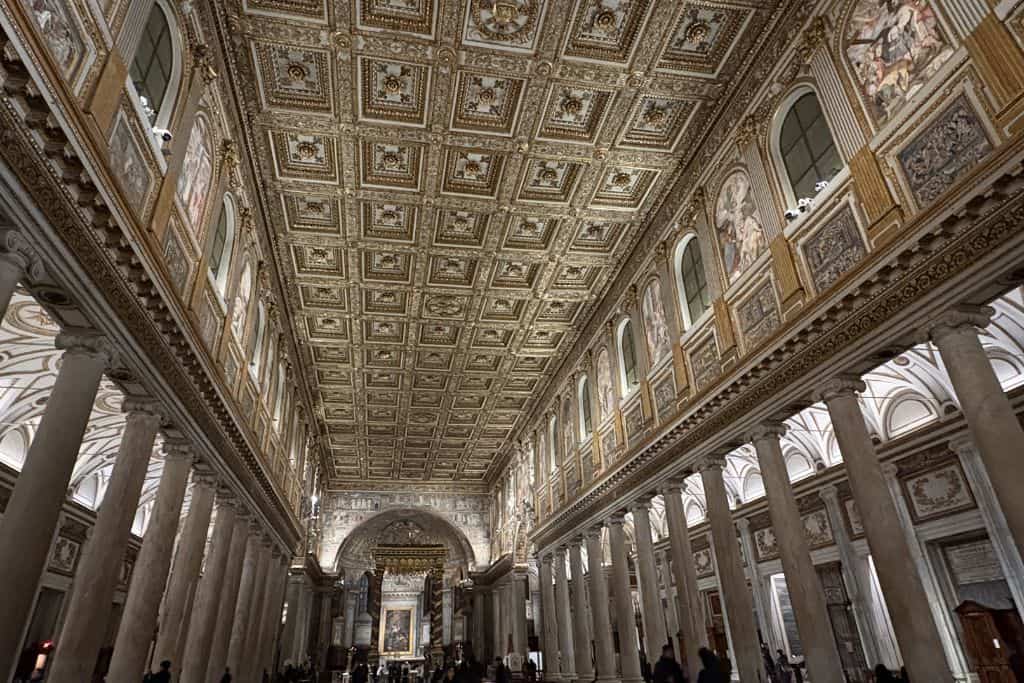
There are a never-ending amount of gorgeous churches in Rome. The Santa Maria Maggiore ended up being one of the most unexpectedly stunning churches I visited in Rome.
As one of the city’s four major basilicas, it’s incredibly grand, but what really stood out to me were the intricate mosaics and the richness of the interior—every inch feels detailed and intentional.
It’s also less overwhelmingly crowded than places like St. Peter’s Basilica, which made it easier to slow down and actually take everything in. If you’re visiting multiple churches in Rome, this is one I wouldn’t skip as it feels just as impressive, but often with a more peaceful atmosphere.
Pope Francis chose to be buried here over St. Peter’s Basilica as he wanted a simpler, less ostentatious burial to represent his service to the poor. Even though I’m not religious, his tomb was so simplistic yet impactful; I shed a tear. Truly a must-see to visit in Rome, Italy.
Book a guided tour of the Basilica of St. Mary Major by clicking here
9. Church of St. Ignatius of Loyola
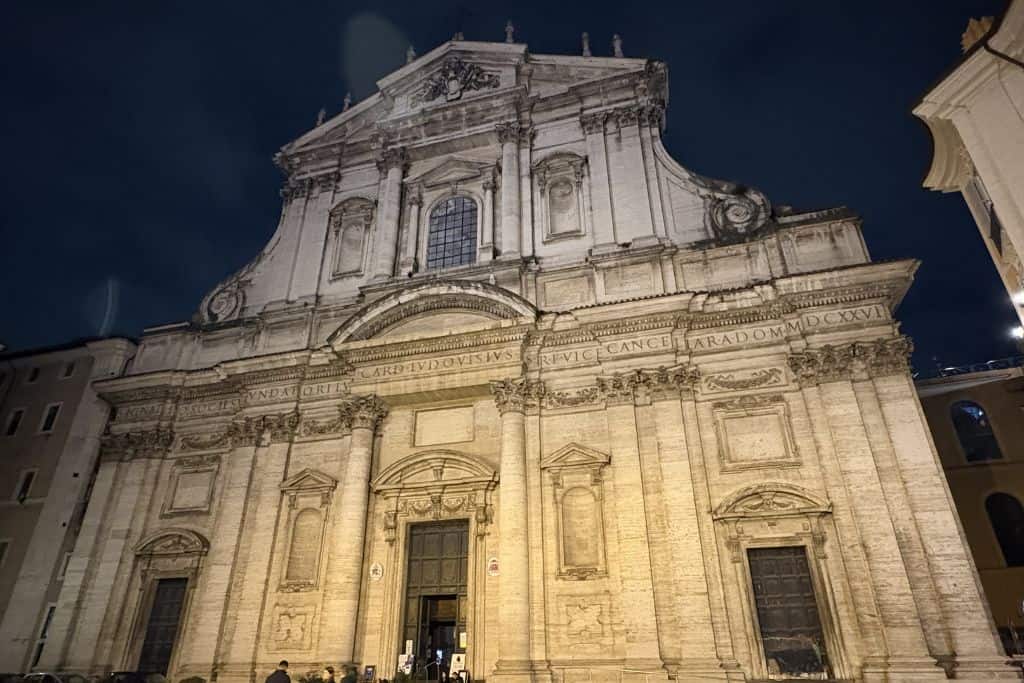
The Church of Sant’Ignazio di Loyola is one of those places that completely caught me off guard in the best way. From the outside, it looks fairly understated, but once you step inside, the ceiling is absolutely breathtaking.
What looks like a grand, domed masterpiece is actually a painted optical illusion by Andrea Pozzo, designed to trick your eye into seeing depth where there isn’t any.
There’s even a marked spot on the floor where you’re meant to stand and when you do, the illusion perfectly aligns. It’s honestly one of the coolest visual tricks I saw in Rome and feels very different from the typical church experience.
Click here for a tour of the church St. Ignatius of Loyola and other baroque treasures!
This is also the “mirror church” you’ve probably seen on TikTok, where a small mirror setup lets you capture the ceiling’s reflection in a perfectly symmetrical shot. It’s a quick stop, but such a memorable (and photogenic) hidden gem.
10. Trevi Fountain
The Trevi Fountain is one of the most beautiful and iconic sights in Rome. I’d recommend visiting the fountain both in the daytime and at night to bask in its full beauty. This site won’t take too long to “visit” but I’d set aside at least 20 minutes to fully enjoy the iconic site.
I will note that since February 2026, there is now a two euro cost to get a front row and throw coin into Trevi Fountain. There are so many tourists that visit Trevi Fountain, they are attempting to limit tourism and control and maintain the sculpture by only allowing a limited number of people to that front section.
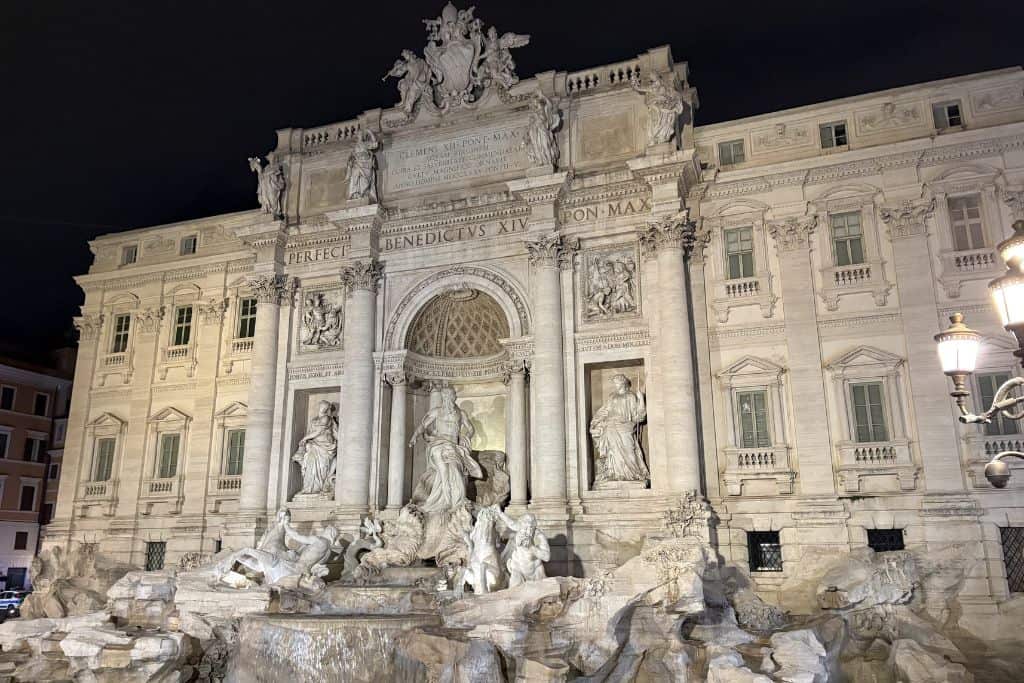
The good thing is, though, now your photos won’t have 10,000 people in the background if you want that iconic photo! Now, if you want that iconic photo tossing your coin back, it is absolutely worth it. Paying this small fee, getting a photo right on the edge.
However, you’ll still be able to see the fountain without paying for front section access. You’ll still be able to see the fountain, but you won’t have as up close view.
Later on, I discuss one of the hidden gems of Rome- visiting the underground of Trevi Fountain!
11. Pantheon
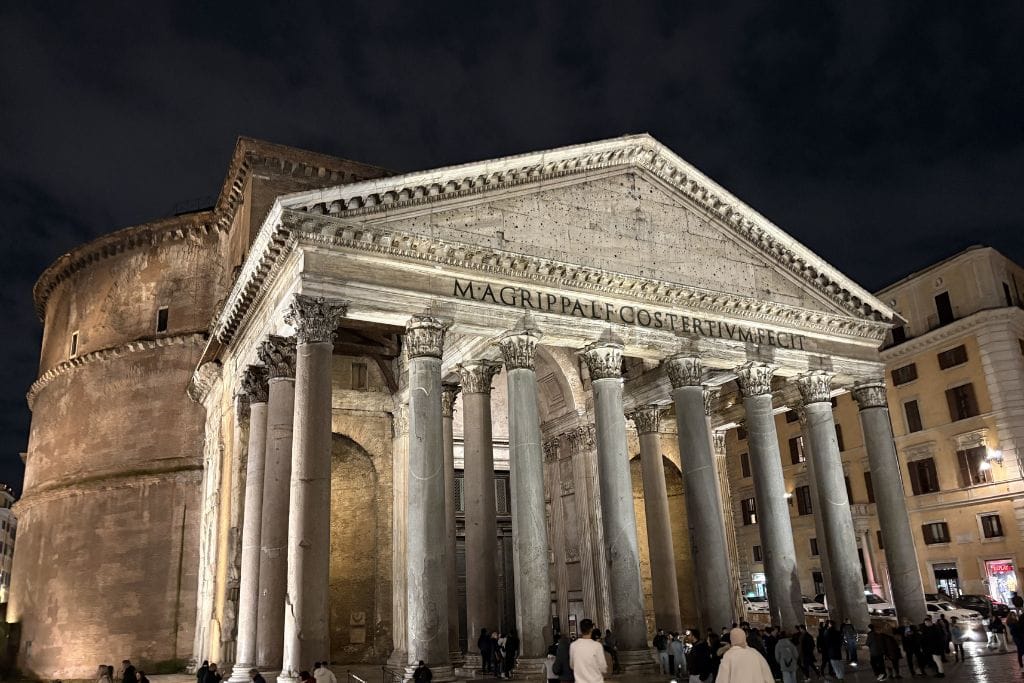
The Pantheon is an architectural wonder and one of the best things to do in Rome. It is one of the oldest buildings from ancient Rome. It features a spherical ceiling with a large hole in the center.
I’d set aside at least 30 minutes to visit the site (more if you don’t book your tickets ahead of time and have to wait in line).
I’d highly recommend visiting the Pantheon while it’s pouring rain, because the views of the rain cascading down are amazing. You might think, “oh no, the building has an open hole. Is it going to get flooded?” Nope, the Romans thought of that too, and they designed the floor to brilliantly drain the rainwater that would come in.
You can stand in line and buy your ticket for the Pantheon. It used to be free, but now they do charge a few euro. However, I would highly recommend booking your time slot in advance.
I was able to quickly whiz through and get in, while others who were buying their tickets on-site had to wait maybe 30 minutes plus.
12. Spanish Steps
The Spanish Steps are one of the most iconic landmarks in Rome and a must-see for first-time visitors exploring the historic center. This elegant staircase of 135 steps connects the lively Piazza di Spagna with the hilltop Trinità dei Monti, offering beautiful views over the city as you climb.
Built in the 18th century, the steps have long been a gathering place for artists, travelers, and locals, and today they remain a popular spot to soak in the atmosphere of Rome. At the base, you’ll find the charming Fontana della Barcaccia, a Baroque fountain that adds to the postcard-perfect setting.
For the best experience, plan to visit early in the morning when the crowds are minimal and the light is ideal for photos, or stop by at sunset for a golden-hour view over the rooftops.
While it may be tempting to sit and relax, keep in mind that sitting on the steps is no longer allowed and fines are enforced.
The surrounding area is also home to some of Rome’s most famous shopping streets, making it an easy stop as you explore nearby attractions. Whether you’re passing through or lingering for photos, the Spanish Steps offer a classic Roman moment that blends history, architecture, and vibrant city life.
13. Villa Borghese
The Villa Borghese is Rome’s most famous park and a peaceful escape from the city’s busy streets. This expansive green space offers shaded walking paths, scenic viewpoints, bike rentals, and even a small lake where you can rent rowboats.
It’s a favorite among both locals and visitors looking to relax between sightseeing stops, and its hilltop terraces provide some of the best panoramic views over Rome, especially near the Pincian Terrace overlooking Piazza del Popolo.
14. Borghese Gallery
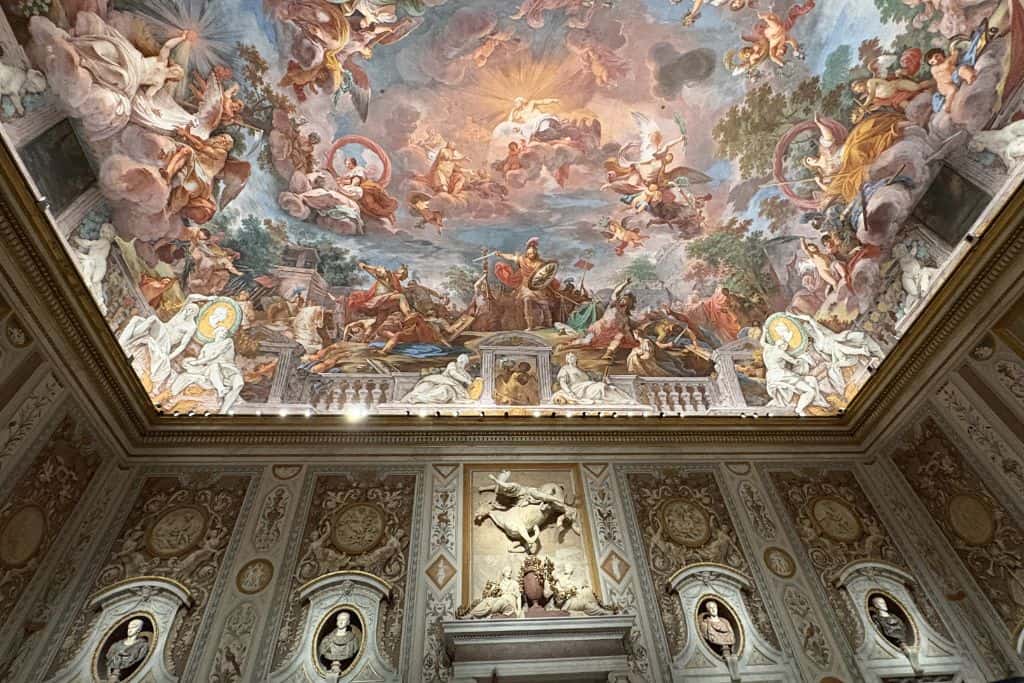
Within the park, the Borghese Gallery is one of the city’s top art museums and a must-visit for art lovers. It was by far one of my favorite things to do in Rome!
Housed in a stunning 17th-century villa, the gallery features masterpieces by artists like Caravaggio and Gian Lorenzo Bernini, including Bernini’s breathtaking sculptures that seem almost lifelike in motion.
Entry is timed and tickets often sell out in advance, so planning ahead is essential. Together, the park and gallery offer the perfect mix of culture and relaxation in the heart of Rome. I took an official tour which really helped to elevate my visit. Tours are available in both English and Italian.
Note- no large bags or drinks are allowed in the museums, but small lockers are provided.
Click here to book a small group guided tour of Borghese Gallery.
15. Eat
And eat, and eat! One of my favorite parts of Rome was simply sitting down and eating—slowly, intentionally, and usually with a carafe of house wine.
Meals here feel less rushed and more like an experience, whether I was grabbing a quick plate of cacio e pepe or settling in for a long dinner in Trastevere.
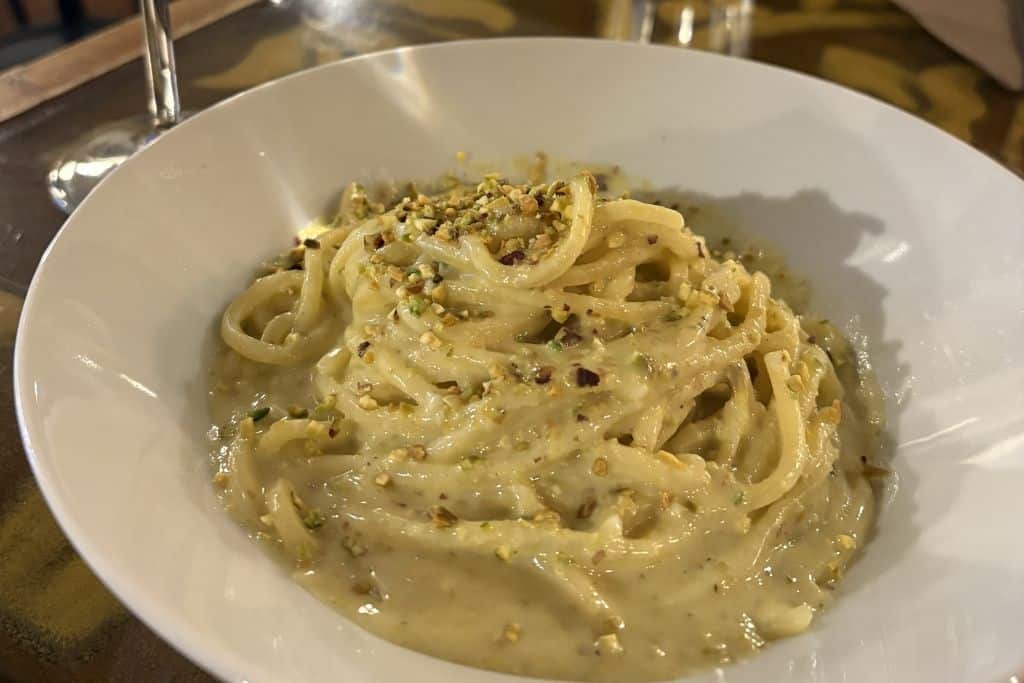
I quickly learned that some of the best spots aren’t the ones right next to major landmarks, but the tucked-away trattorias filled with locals speaking rapid Italian.
I made it a point to try classic Roman dishes, carbonara, amatriciana, and supplì, and honestly, even the “simple” meals felt unforgettable.
My biggest tip: don’t over-plan every meal. Some of my favorite moments came from wandering down a quiet street, spotting a cozy restaurant, and just going for it.
Best Things to Do in Rome at Night
Rome is an entirely different city at night. The street lights cascade off the buildings and the monuments take on an entirely different life.
16. Explore Trastevere Neighborhood
The Trastevere neighborhood offers a completely different feel from Rome’s grand monuments, with its cobblestone streets, ivy-covered buildings, and laid-back, local charm.
Located just across the Tiber River, this historic district is known for its vibrant atmosphere, especially in the evenings when its narrow lanes fill with people heading to restaurants, wine bars, and piazzas.
At its heart is Santa Maria in Trastevere, one of the city’s oldest churches, famous for its stunning golden mosaics. Trastevere is the perfect place to wander without an agenda—getting lost here is part of the experience.

By day, it’s quieter and ideal for exploring artisan shops and cafés, while at night it transforms into one of Rome’s best spots for authentic dining and a lively, local vibe.
Click here to book one of the many food-centered Trastevere walking tours to embrace the neighborhood’s charm truly. One of the must-do activities in Rome!
17. Explore Rome’s Piazzas
Rome’s piazzas are the heart and soul of the city—open-air gathering spaces where history, art, and everyday life come together. From grand fountains to lively cafés, each square has its own personality and story.
Whether you’re stopping for a coffee, people-watching, or admiring Baroque architecture, exploring these piazzas is one of the best ways to experience the rhythm of Rome.
One of the most famous is Piazza Navona, a stunning square built on the site of an ancient Roman stadium.
Click here to book a nighttime walking tour of the famous monuments and piazzas of Rome! I took this exact tour on my last trip to Rome.
Known for its elegant oval shape, it’s home to three impressive fountains, including the iconic Fountain of the Four Rivers by Gian Lorenzo Bernini.
Surrounded by restaurants, street artists, and historic buildings, Piazza Navona is always lively—especially in the evening when the atmosphere feels both vibrant and romantic. It’s the perfect place to pause, take in Rome’s beauty, and soak up the city’s timeless charm.
18. Walk at Night
Rome completely transforms at night, and this ended up being one of my favorite ways to experience the city. After the crowds thin out, the landmarks feel more magical and almost cinematic.
Walking past places like Trevi Fountain or Piazza Navona in the evening felt calmer, cooler, and somehow more intimate than during the day.
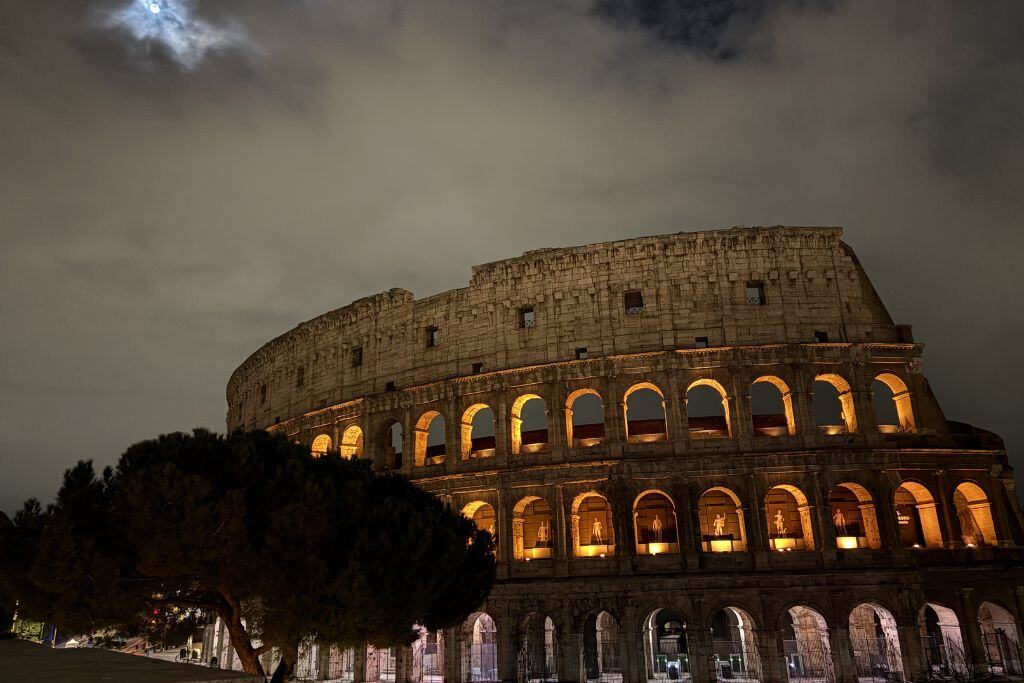
I found myself slowing down more at night—grabbing gelato, strolling without a strict plan, and just taking it all in.
If you feel safe and stick to well-lit areas, it’s one of the best ways to see Rome without the chaos. It’s less about checking things off a list and more about soaking in the atmosphere.
19. Rooftop Bars
One of my favorite ways to take in Rome’s skyline is from a rooftop bar. These spots offer breathtaking views of domes, piazzas, and terracotta rooftops, all while you sip a cocktail or an Aperol spritz.
Some favorites include the terrace at La Grande Bellezza Rooftop for sunset over the Pantheon, or the rooftop at Hotel Raphael, which gives you sweeping views of Piazza Navona and beyond.
Rooftop bars are perfect for a relaxed evening after a day of walking through Rome’s historic streets. Even if you’re not drinking, the cafes often let you enjoy a coffee or gelato while soaking up the golden hour.
My tip? Go just before sunset as the city glows in the warm light, and it’s the perfect backdrop for photos that really capture the magic of Rome.
Hidden Gems of Rome: Must-See
Rome is full of famous monuments- the Vatican, the Colosseum- but it has so many worthwhile lesser-known sites that are still magnificent.
20. Trajan’s Market
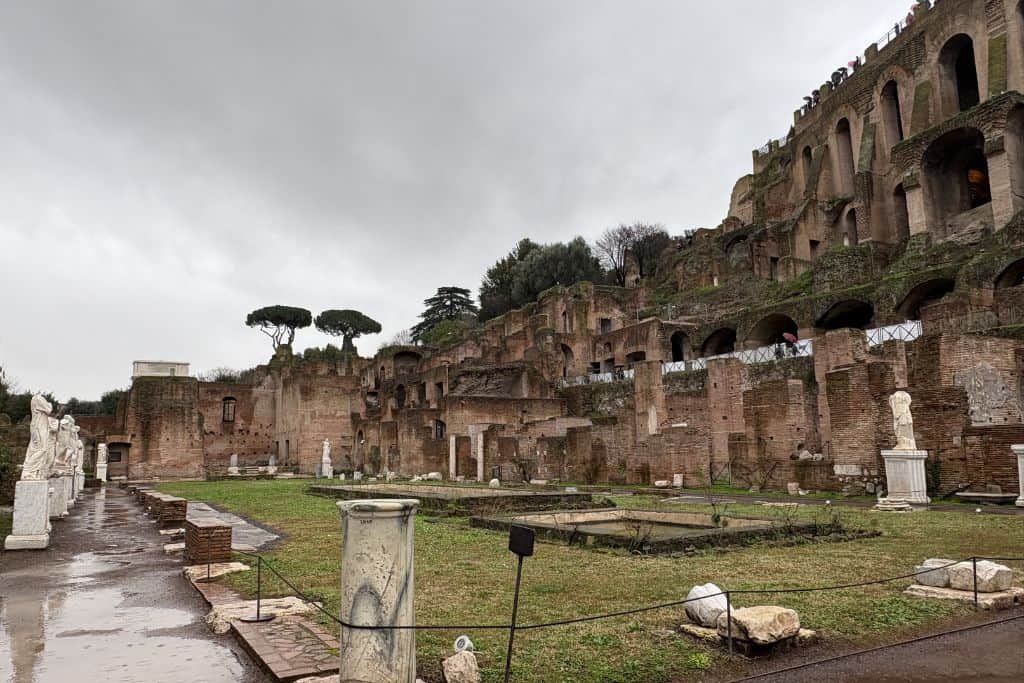
Exploring Trajan’s Market felt like uncovering a surprisingly modern side of ancient Rome. Often considered the world’s first shopping complex, this multi-level structure was built under Emperor Trajan and once housed shops, offices, and administrative spaces all built into the hillside.
Walking through the brick corridors and archways, I could actually picture what it might have felt like to browse here thousands of years ago; it’s structured in a way that feels oddly familiar of modern shopping centers.
What I loved most is how underrated it is compared to nearby landmarks like the Colosseum. It’s quieter, less crowded, and gives you a deeper appreciation for how advanced Roman urban design really was.
If you’re looking for something historical but a little off the main tourist path, this is such a worthwhile stop.
21. Castel Sant’Angelo
Taking in the views from Castel Sant’Angelo ended up being one of my favorite experiences in Rome. Originally built as a mausoleum for Emperor Hadrian, it later evolved into a fortress, papal residence, and now a museum—so you’re walking through layers of history as you make your way to the top.
The real highlight, though, is the terrace. From here, you get sweeping views over the Tiber River and a perfectly framed look at St. Peter’s Basilica in the distance.
I timed my visit for sunset, and it felt much calmer than other viewpoints in the city. If you want incredible views without the same level of crowds, this is one spot I wouldn’t skip.
22. Capuchin Crypt

The Capuchin Crypt is easily one of the most unusual places I visited in Rome—and definitely not for everyone. Beneath a simple church lies a series of chapels decorated entirely with the bones of thousands of Capuchin friars.
There is a small museum and an audioguide included that gives some context to the Friars, and why the group began to bury the Friars in the crypts below.
The crypts contain a few small rooms of the skeletons of the Friars posed in positions. Imagine- bones making up crosses, chandeliers, wall decor.. It’s eerie, fascinating, and oddly peaceful all at once.
If you love creepy things (like the Catacombs in Paris) this is a must-see. There are also third-party tours that can give you a more comprehensive tour of the crypts if you don’t prefer audioguides.
Click here to book a tour of the crypts.
23. Largo di Torre Argentina
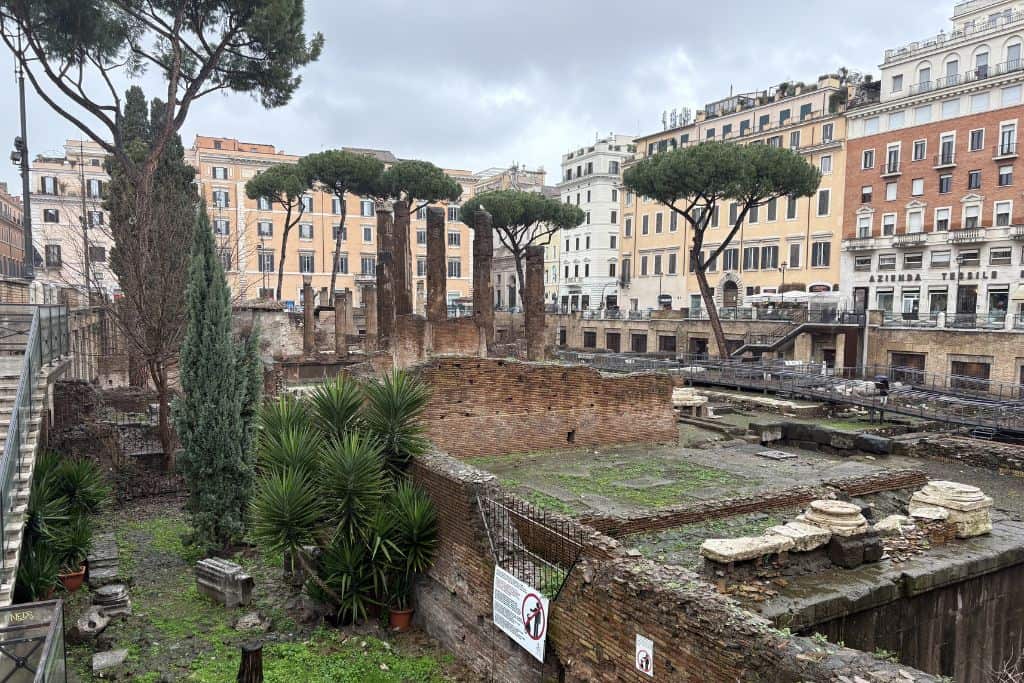
I stumbled upon one of Rome’s most unexpected spots at Largo di Torre Argentina, an ancient ruin that also happens to be a sanctuary for stray cats. Looking down into the site, you’ll see cats lounging among centuries-old temple remains, completely unbothered by the history around them.
What I loved most was how this place blends everyday life with ancient history. Volunteers care for the cats, and it’s clear they’re a cherished part of the city.
Knowing that this is also where Julius Caesar was assassinated adds another layer, it’s surreal standing above such a pivotal historical site while watching cats nap in the sun.
24. Underground Trevi
Most people visit the Trevi Fountain, but far fewer make it underground to the Vicus Caprarius, also known as the “City of Water.”
Hidden beneath the streets, this small archaeological site reveals ancient Roman ruins and a still-functioning water system that feeds the fountain above.
It felt like discovering a secret layer of Rome—quiet, uncrowded, and incredibly well-preserved. After being shoulder-to-shoulder at the fountain, coming down here was a completely different experience and gave me a deeper appreciation for how much history lies beneath the surface.
Book your ticket for the underground Trevi aqueduct tour here.
25. Aventine Overlook
Okay Tiktok discovered this hidden gem, and it isn’t so hidden anymore. One of my favorite quieter views in Rome was from the Aventine Hill.
It’s a bit removed from the main tourist areas, which makes it feel calmer and more local. From here, you can take in beautiful views over the city, especially around sunset.
While I was there, I also stopped by the famous Knights of Malta Keyhole—a tiny but perfectly framed view of St. Peter’s Basilica through a garden-lined corridor. It’s a quick stop, but one of those uniquely Rome moments that feels like a hidden secret.
26. Appian’s Way
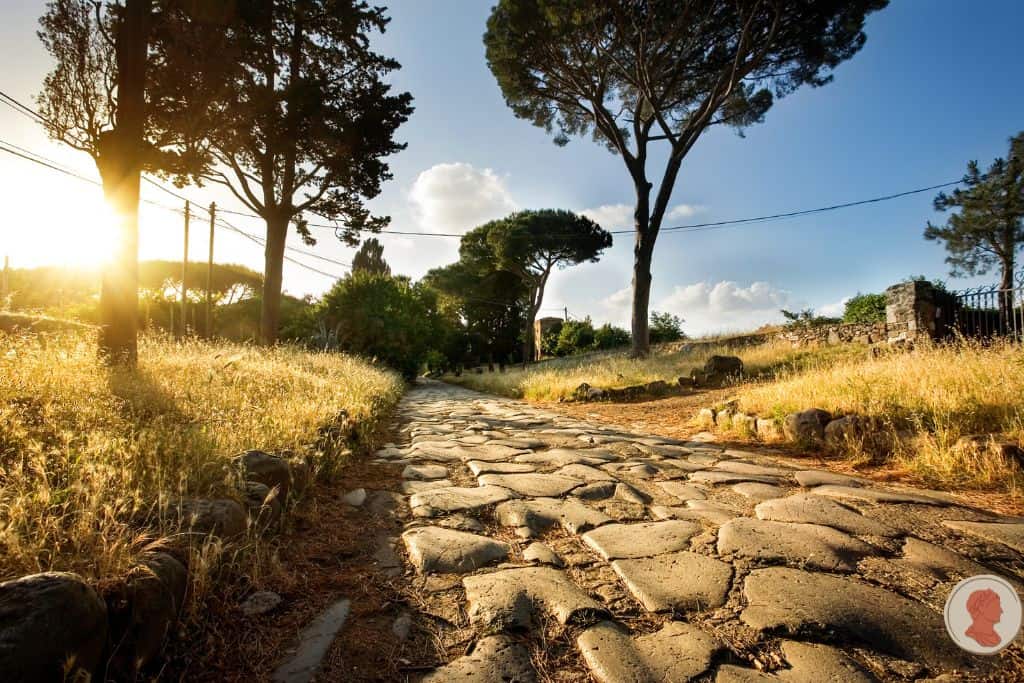
Walking along the Appian Way felt like stepping straight back into ancient Rome. Known as one of the oldest and most important Roman roads, it was originally built in 312 BC and once connected Rome to southern Italy.
Today, parts of it are still paved with the original stones, worn smooth by centuries of footsteps, chariots, and history.
What I loved most was how peaceful it felt compared to the city center. Surrounded by greenery, ruins, and scattered catacombs, it’s the kind of place where you can slow down and really take in the scale of ancient Rome.
I rented a bike to explore more of it, which made it easier to cover distance and stumble upon hidden tombs and quiet stretches along the way.
It’s definitely a bit off the typical tourist path, but that’s what makes it so special. If you have extra time in Rome and want something different from the usual landmarks, the Appian Way offers a unique mix of history, nature, and a break from the crowds.
27. Altar of the Fatherland
You may have passed by this massive structure on the way to the Colosseum, and thought what is this?! The Altar of the Fatherland—also called the “Wedding Cake” for its massive white marble terraces—is one of Rome’s most iconic monuments.
Built to honor King Victor Emmanuel II, it’s impossible to miss with its towering statues, grand staircases, and sweeping terraces.
Inside, you’ll find museums dedicated to Italian history and a chance to learn about the country’s unification. But the real draw? The panoramic terrace at the top. From here, you can see the sprawling city below, from the Colosseum to the Roman Forum, making it one of the best viewpoints in the heart of Rome.
Even if you don’t go inside, the exterior alone is worth a walk-around to admire its striking architecture and the surrounding piazza.
3 Day Itinerary: Best Things to Do for a Weekend in Rome
Rome is a huge city, but I think 3 days is the perfect amount to get a good overview of the city and see most of the main sites for a first-time visitor. However, you will definitely want to prioritize whether you want to deep dive into art, history or a bit of everything.
Rome is not a city that you can “wing”. Make sure you have your tours booked and tickets purchased well ahead of time, especially if you are visiting in high season. Don’t expect to see everything and prioritize your bucket list of Rome activities.
Quick Links: Must-see sights in Rome.
These are the exact tours I took on my last trip to Rome! These are unmissable for trips to Rome. They are all small groups of under 15 people. I did extensive research to choose these options and I learned so much history behind these iconic monuments.
Must-do tours:
Colosseum, Palantine Hill, and Roman Forum Tour
Vatican Museums, Sistine Chapel, and St. Peter’s Basilica Tour
Night Walking Tour Rome (Pantheon, Trevi Fountain)
Trastevere Food Tour
Borghese Gallery
Lodging: Booking.com
Travel Insurance: Insubuy
This is the exact itinerary I followed on my last trip to Rome:
Rome Day 1
Arrive in Rome, and get settled into your hotel. For the remainder of the day, I would focus on walking around and getting oriented to the city.
Check out neighborhoods like Centro Storico, and Trastevere. Grab dinner at Trastevere or take one of the famous food tours in Trastevere.
Rome Day 2
Spend the first half of the day in Vatican City with a comprehensive tour covering the Vatican Museum, Sistene Chapel and St. Peter’s Basilica. This will be an early morning as most tours convene around 7:45 to be ready for the 8am Museum opening.
Even if you choose to forego a tour, and buy your own ticket, be sure to buy the earliest time slot possible to avoid crowds.
You’ll spend 2-3 hours winding your way through the Vatican Museum, ending your visit at the Sistine Chapel. If you are taking a tour, you’ll be able to go directly to St. Peter’s Basilica where your tour will likely end. From there you can choose to visit the tombs or climb the Basilica. (Both of which I recommend!)
Grab lunch nearby and head back to your hotel for a brief break. Even though its tempting to book every minute of your trip, you’ll want to book in some down time, or some time to wander around and shop.
Next, you’ll schedule in a few hidden gems! Head to Santa Maria Cappucini to see the infamous skeletons of the Friars. Then you’ll want to head to Santa Maria Maggiore to see the burial place of Pope Francis and the stunning basilica.
Grab dinner, and end your day with a night walking tour of all the main monuments- Piazza Navona, Trevi Fountain, Pantheon, and Church of St Ignacius Loyola. End your night with a drink at a rooftop bar.
Rome Day 3
Spend the first half of your day with a guided tour of the Colosseum, Palantine Hill and Roman Forum. You’ll start the day early and end your tour around noon.
From there, you will visit the Cat Sanctuary and the Pantheon (prebook an early afternoon time slot). Grab lunch in the area.
Head back to your hotel for a brief break before heading out to your booked 2-hour tour at the Galeria Borghese.
Finish your trip with a lengthy dinner and an Aperol Spritz.
Where to Stay in Rome?
Rome is large and overwhelming. I’ve curated some of my favorite options that I considered staying at during my most recent stay in Rome. I stayed at Hotel Donna Francesco most recently!
📍Hotel Romano– $$ Roman Forum
Views of the Roman Forum at an affordable price? Sold!
📍HT6 Hotel Roma– $$ Jewish Ghetto
Amazing breakfast and ornate rooms not too far from the Colosseum.
📍Casa Arpinelli– $$ Trevi Fountain
Stunning rooms steps from the Trevi Fountain at a surprisingly affordable price?
📍Hotel Donna Francesco– $ Termini Station
Simple, near the train station and bus stops. This is where I stayed on my last solo trip to Rome!
📍Hotel San Silvestro– $ Centro Storico
Great central location at an affordable price.
Travel Tips for Rome (FAQs)
Rome is an amazing city with so much to do and see, but it’s necessary to be prepared. Here are some frequently asked questions to help you prepare your trip for all the must-see sites.
Best Time of Year to Visit Rome?
In my opinion, the winter is the best time to visit Rome because it has manageable temperatures and low crowds! Tourist season ramps up May-September with scorching temperatures.
In February when I last went to Rome, I had the Vatican to practically myself! Unheard of! If you are okay with mildly chilly temperatures, November-March would be a great time to visit.
Is 3 days enough to visit Rome?
Yes, but don’t expect to see everything. I think 3 days is the perfect amount of time for a first time visitor to Rome and to see the major highlights.
Don’t book yourself non-stop. You’re going to be walking a ton and need some downtown. Prioritize what you want to see but don’t try to see everything. There are so many things to do in Rome- you’ll have to pick and choose based on your interests!
Things to do in Rome in Winter?
Rome is my favorite in December, January and February. Besides some chilly temperatures and occasional rain, you’ll be able to do everything Rome has to offer but without the crowds or heat.
Besides rooftop bars (that will most likely be closed), all of Rome’s main sites will be open. It rarely gets below freezing so even outside tours are still operational.
How to get from Rome airport to downtown?
Easy- take the Leonardo Express 30 minute train from Rome Fiumicino Airport. Buy your ticket at the airport at the red kiosks before the tracks. Follow the signs for train and you’ll be in Rome Termini Station in 30 minutes. Trains leave every 15 minutes.
From Rome Termini you can connect to the metro or bus you need.
Best tour operators for Rome?
I find all of my tours from the 3rd party site Viator. These platforms show a variety of tours and allow you to filter by highly reviewed tours. I have been using Viator for over 10 years on my travels.
Conclusion: Best Things to Do in Rome
Rome is a city that blends ancient history, stunning art, and vibrant modern life at every turn. From iconic landmarks like the Colosseum, Roman Forum, and Vatican Museums, to hidden gems tucked in charming neighborhoods like Trastevere and Monti, there’s always something to explore.
Whether you’re tossing a coin at the Trevi Fountain, climbing the dome of St. Peter’s Basilica for breathtaking views, strolling along the Appian Way, or discovering Rome’s culinary delights at bustling markets and rooftop bars, every corner offers a story.
With so many must-see sites and secret spots, planning your days in advance ensures you experience the best of this timeless city without feeling rushed. Rome is truly a bucket-list city with so many things to do and must-see sites; Enjoy!
